

Fibermaxxing means deliberately eating more fiber, often to meet or pass daily targets. Here is…

Black Sesame: Nutrition, Flavor, and Why It Is Trending
Black sesame is a variety of sesame seed with a dark hull, a deep toasted flavor, and a long history in East Asian desserts. It is turning up in lattes, ice cream, and pastries across the US because it offers a rich, nutty taste that is less sweet than most dessert flavors, along with a dramatic charcoal-gray color.
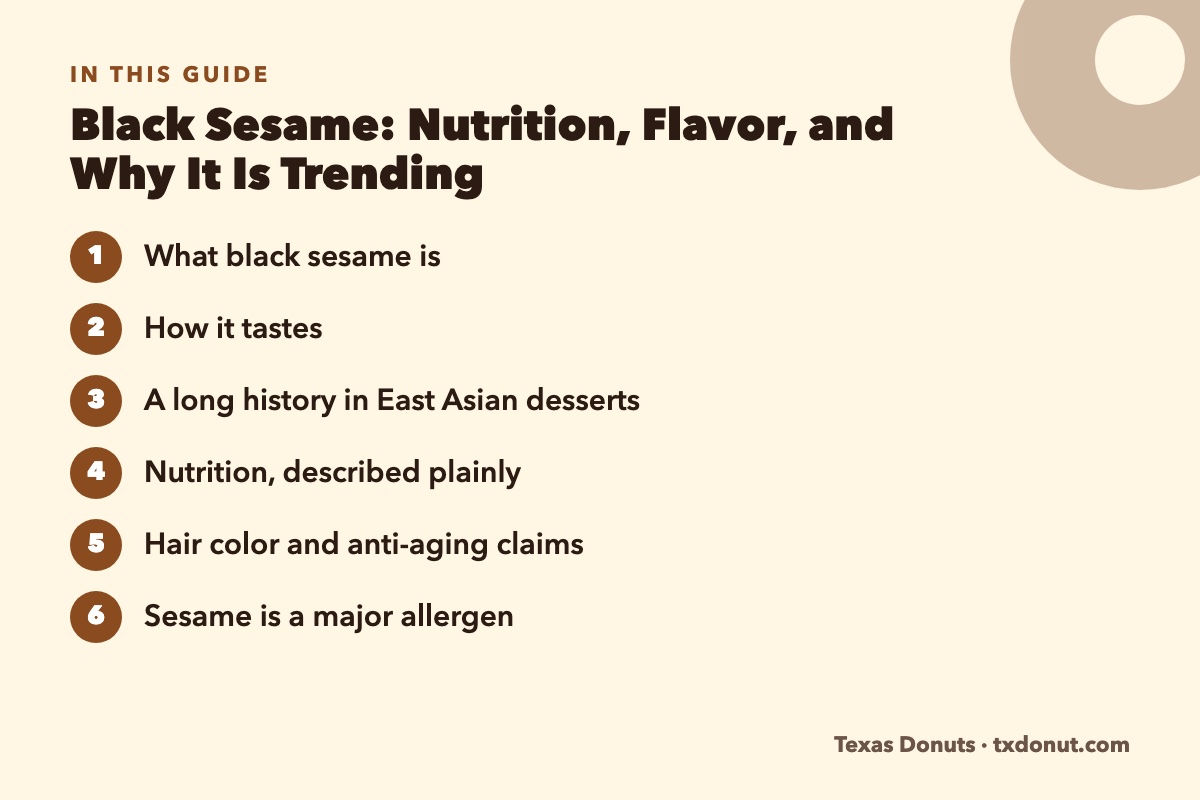
What black sesame is
Black sesame comes from the same plant species as the pale sesame seeds on a hamburger bun. The difference is the variety and the hull. Black sesame seeds are typically sold unhulled, with the dark outer coat intact, while most white sesame seeds sold in the US have had the hull removed.
That hull matters. It adds a slight crunch, a faintly bitter edge, and some extra fiber and minerals. The seeds are sold raw or toasted, whole or ground, and as a paste that looks like black tahini.
How it tastes
Toasted black sesame is nutty, earthy, and a little smoky, with a mild bitterness at the finish. People often compare it to dark roasted peanuts or to tahini with more depth. Raw seeds taste flat by comparison, so nearly every recipe starts with toasting.
| Black sesame | White sesame | |
|---|---|---|
| Hull | Usually left on | Usually removed |
| Flavor | Stronger, earthier, slightly bitter | Milder, sweeter, buttery |
| Texture | A bit crunchier | Softer |
| Color in recipes | Gray to jet black | Cream to tan |
| Common uses | Desserts, fillings, drinks, garnishes | Tahini, breads, stir-fries, garnishes |
In desserts it plays a role similar to peanut butter or hazelnut. It pairs well with honey, vanilla, milk, cream, white chocolate, matcha, red bean, banana, and rice-based sweets.
A long history in East Asian desserts
None of this is new. Black sesame has been a standard dessert flavor in China, Japan, and Korea for generations.
- China: Black sesame soup is a warm, sweet, pudding-like dessert made from ground seeds, often thickened with rice. Tangyuan, the glutinous rice balls eaten at Lantern Festival and family gatherings, are frequently filled with a sweet black sesame paste that flows when you bite in.
- Japan: Black sesame is called kuro goma. It flavors ice cream, puddings, mochi, and breads, and a smooth paste called neri goma is a pantry item.
- Korea: Known as heugimja, it goes into a smooth porridge, rice cakes, and more recently lattes and soft serve.
Nutrition, described plainly
Like other seeds, black sesame is energy-dense and nutrient-rich. In general terms it provides:
- Fat, which makes up roughly half the seed by weight and is mostly unsaturated
- Plant protein in a moderate amount
- Fiber, with the hull contributing extra
- Minerals, including calcium, iron, magnesium, zinc, and copper
- Lignans, plant compounds such as sesamin and sesamolin that researchers are studying for antioxidant activity
Two caveats keep this in perspective. First, portions are small. A tablespoon in a latte or a scoop of ice cream contributes modest amounts of these nutrients, and the sugar and cream in most black sesame desserts count too. Second, compounds in the hull, such as oxalates and phytates, can reduce how much of the calcium and other minerals your body absorbs. Black sesame is a nutritious ingredient, but it is not a substitute for a varied diet.
Exact nutrient figures vary between products, so check the label on the seeds or paste you buy.
Hair color and anti-aging claims
You will see posts claiming that eating black sesame reverses gray hair, darkens hair, or slows aging. These ideas come from folk tradition. In traditional Chinese food culture, black sesame has long been associated with hair and vitality, and that belief has traveled online along with the ingredient.
It is not established science. There is no reliable clinical evidence that eating black sesame restores hair color, prevents graying, or slows aging. Laboratory and small early-stage studies on sesame compounds do not show that a spoonful of paste will change your hair or skin. Graying is driven largely by genetics and age. Enjoy black sesame for its flavor and as one nutritious food among many, and be skeptical of any product that promises more.
Sesame is a major allergen
Sesame is one of the nine major food allergens under US law, and since 2023 it must be declared on packaged food labels. Reactions can be severe. This applies equally to black and white sesame, sesame oil, tahini, and sesame paste.
- If you have a sesame allergy, avoid black sesame in every form.
- Ask at bakeries, cafes, and ice cream shops about ingredients and shared equipment, since unpackaged foods do not carry labels.
- Parents with questions about introducing sesame to a baby or young child should talk to their pediatrician.
Why it is trending now
Several things are pushing black sesame into the mainstream at once. East Asian bakeries and dessert shops have expanded in American cities, including across the Dallas area. Matcha and ube opened the door for other Asian dessert flavors. The color photographs well, which helps on social media. And many people want desserts that taste toasty and complex instead of purely sweet.
You are most likely to meet it as a latte, soft serve, a cream-filled bun, a croissant filling, or a glaze. A black sesame glazed donut is a good first taste if your local shop makes one.
Easy ways to try it at home
- Sprinkle toasted seeds over rice, noodles, salads, or roasted vegetables.
- Stir a spoonful of black sesame paste into oatmeal or plain yogurt with honey.
- Blend paste into a banana smoothie or warm milk.
- Whisk it into vanilla frosting or a simple glaze.
Look for seeds and paste at Asian grocery stores and in the international aisle of larger supermarkets. Buy from a store with good turnover, because the oils in sesame turn rancid with age.

Related Reading
Frequently Asked Questions
What does black sesame taste like?
Toasted black sesame tastes nutty, earthy, and slightly smoky with a mild bitter finish. It is often compared to dark roasted peanuts or a deeper, stronger tahini.
Is black sesame healthier than white sesame?
The two are nutritionally similar. Black sesame is usually sold with the hull on, which adds some fiber and minerals, but the difference is small in the amounts most people eat.
Does black sesame reverse gray hair?
There is no reliable scientific evidence that eating black sesame reverses or prevents gray hair. The idea comes from folk tradition, and graying is driven largely by genetics and age.
Is black sesame a common allergen?
Yes. Sesame is one of the nine major food allergens in the United States and must be declared on packaged food labels. Anyone with a sesame allergy should avoid black sesame in all forms.