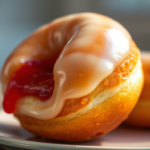

Few things in a bakery case are as tempting as a plump, sugar-dusted donut hiding…

How to Make a Cream-Filled Donut at Home
Few pastries deliver the quiet drama of a cream-filled donut: a soft, yeasted shell that gives way to a cool ribbon of vanilla cream. While Dallas-Fort Worth bakeries make it look effortless, the technique is well within reach of a patient home cook. This guide breaks down the dough, the filling, and the frying so you can build a bakery-quality donut from scratch.
Start With an Enriched Yeast Dough
Cream-filled donuts almost always begin with a soft, enriched yeast dough rather than a cake batter. The classic ratio includes bread or all-purpose flour, milk, eggs, sugar, butter, and active dry or instant yeast. The eggs and butter give the crumb its tender, pillowy structure, while the yeast provides the lift that makes a hollow pocket for filling.
Mix and knead until the dough is smooth and slightly tacky, then let it rise until doubled, usually one to two hours depending on your kitchen’s temperature. After the first rise, roll the dough about half an inch thick and cut rounds with a plain cutter. Crucially, leave these as solid circles with no center hole, since you need an unbroken interior to hold the cream. Let the cut rounds proof a second time until puffy and light to the touch.
Choose Your Cream Filling
The word “cream” covers several distinct fillings, and picking the right one shapes the final donut. Each has a different texture and sweetness, so match it to the experience you want.
- Pastry cream (crème pâtissière): A cooked custard of milk, egg yolks, sugar, and cornstarch, thickened on the stove and chilled. Rich and stable, it is the bakery standard for Boston cream and vanilla-filled donuts.
- Bavarian cream: Pastry cream lightened with whipped cream and often set with a little gelatin, giving a silkier, mousse-like bite.
- Whipped cream or crème diplomat: Lighter and airier, best filled and eaten the same day since it softens quickly.
- Marshmallow or buttercream “creme”: The sweeter, shelf-stable style found in many classic snack-cake donuts.
For a first attempt, a basic vanilla pastry cream is the most forgiving. Cook it until it bubbles and thickens, then press plastic wrap directly onto the surface and refrigerate until cold so it pipes cleanly.
Fry for an Even, Golden Shell
Frying temperature is the single biggest factor in success. Heat a neutral oil such as canola or vegetable to around 350°F (175°C) and keep a thermometer in the pot. Too cool and the donuts absorb grease and turn heavy; too hot and the outside browns before the inside cooks through.
Fry a few donuts at a time so the oil temperature does not crash, turning once so each side reaches a deep gold. Most rounds need roughly 60 to 90 seconds per side. Lift them onto a wire rack or paper towels to drain. A properly fried cream donut shows a pale ring around its middle, a sign the interior stayed light and that the center is hollow enough to fill.
Fill, Finish, and Serve
Once the donuts are just cool enough to handle but still slightly warm, fit a piping bag with a long, narrow filling tip. Poke a hole in the side, insert the tip, and pipe steadily until you feel the donut swell and grow heavier in your hand. That weight tells you the pocket is full without bursting the shell.
Finish according to the style you are after: a dusting of powdered sugar, a quick dip in chocolate glaze for a Boston cream effect, or a simple sugar coating. Because fresh cream fillings are perishable, refrigerate any donuts you are not eating right away and enjoy them within a day or two for the best texture and food safety.
Tips for Bakery-Level Results
- Weigh your flour for consistent dough hydration from batch to batch.
- Proof in a warm, draft-free spot; under-proofed donuts fry up dense.
- Chill the filling thoroughly so it holds its shape when piped.
- Fry in small batches and let the oil recover to 350°F between rounds.
Making cream-filled donuts rewards attention more than it demands skill. Nail the proof, hold your oil steady, and chill your filling, and you will pull warm, custard-laden donuts from your own kitchen that rival the case at any Dallas donut shop. Once the method clicks, the fillings and finishes are yours to reinvent.