

Few foods inspire the kind of devotion that donuts do. From the first warm bite…
Types of Donuts: A Field Guide to Every Style Worth Knowing
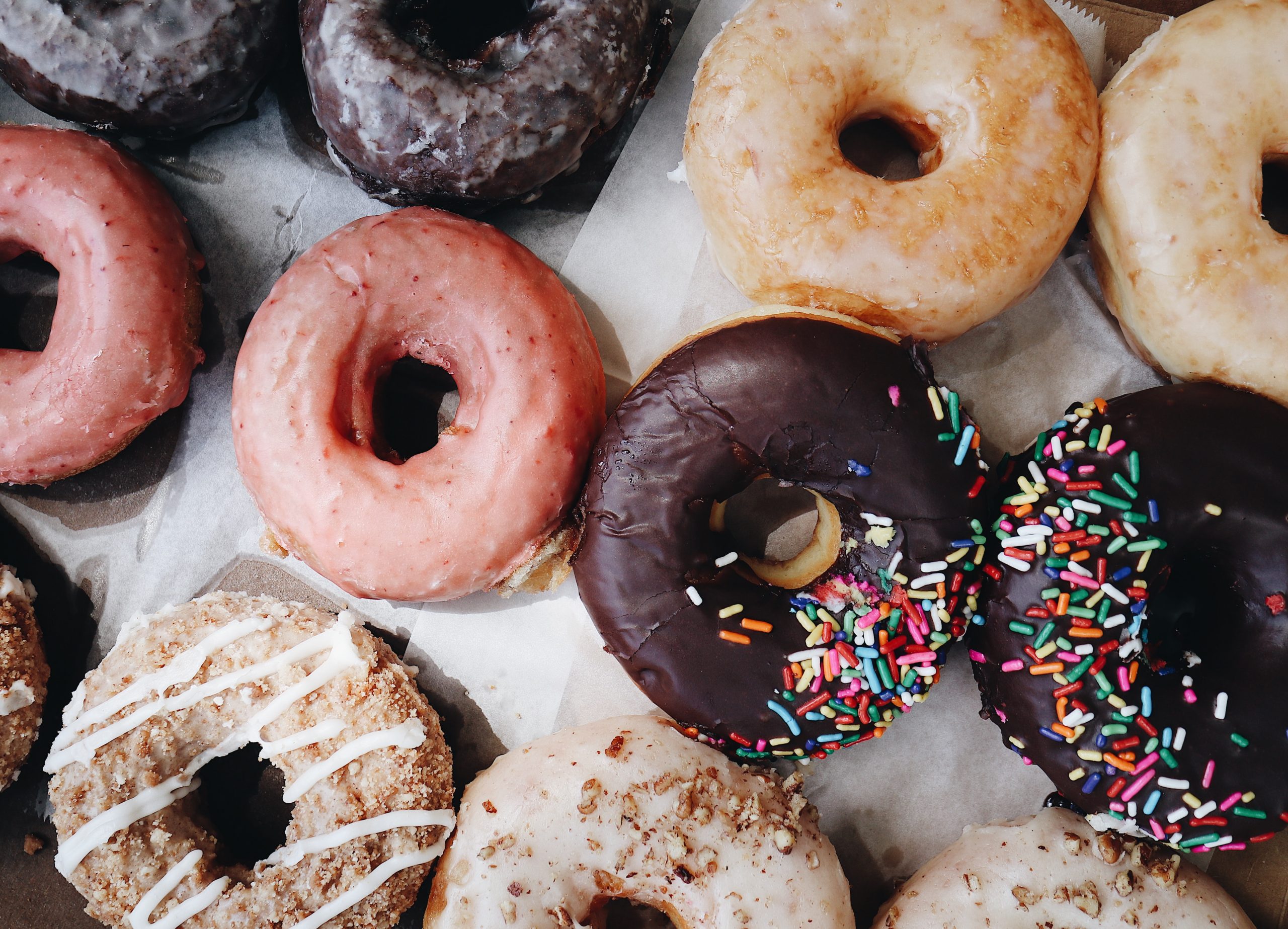
Walk into any donut shop and the case in front of you tells a story that stretches across continents and centuries. Behind the glaze and sprinkles, donuts fall into a handful of distinct families, each with its own dough, method, and texture. Understanding those families makes you a smarter customer and helps you appreciate the craft behind a great Dallas-Fort Worth dozen.
The Two Foundations: Yeast and Cake
Almost every donut you will ever eat starts as one of two basic doughs. Yeast-raised donuts rely on yeast for their rise, which is why they are tall, airy, and chewy with a slightly bready pull. The dough is mixed, proofed until it doubles, cut, proofed again, and then fried, giving it that signature lightness. Classic glazed rings, filled donuts, and bars almost always belong to this family.
Cake donuts, by contrast, use chemical leavening like baking powder or baking soda instead of yeast. They have a denser, more tender crumb that breaks rather than tears, and a slightly crisp exterior because the batter is piped directly into the fryer. Old-fashioned sour cream and buttermilk donuts are the most beloved cake-style examples, prized for their craggy edges that catch extra glaze.
Glazed, Frosted, and Finished
Once the dough is fried, the finish defines the experience. A simple sugar glaze is the most traditional, applied warm so it sets into a thin, glossy shell. Beyond that, the variety is enormous, and most shops mix and match these finishes across both yeast and cake bases.
- Frosted donuts wear a thicker layer of chocolate, maple, strawberry, or vanilla icing.
- Powdered and sugared donuts are tossed in confectioners’ or granulated sugar, often while still warm.
- Cinnamon sugar coatings add warmth and a little crunch.
- Glazed-and-topped donuts layer crushed nuts, sprinkles, coconut, or cereal over the icing.
Filled, Shaped, and Specialty Styles
Not every donut is a ring. Filled donuts skip the hole so they can hold a pocket of fruit jam, custard, cream, or lemon curd. Jelly donuts, Boston cream (custard filled, chocolate topped), and Bavarian cream are the classics here. Shape brings even more variety: bars and long johns are rectangular and often filled or maple-glazed, twists are braided lengths of yeast dough, and donut holes turn the punched-out centers into bite-sized treats.
Then there are the regional and specialty styles that have earned cult followings:
- French crullers, made from light choux pastry, are ridged, eggy, and almost weightless.
- Old-fashioned cake donuts with their cracked, glaze-grabbing surface.
- Apple fritters, craggy clusters of dough studded with fruit and cinnamon.
- Beignets, the square, yeast-raised, powdered-sugar pillows famous in New Orleans.
- Malasadas and paczki, rich filled donuts tied to Portuguese and Polish traditions.
How to Choose at the Counter
Knowing the categories helps you order with intention. If you want something light to pair with morning coffee, reach for a yeast-raised glazed ring or a French cruller. If you crave richness and a sturdier bite, an old-fashioned or buttermilk cake donut delivers. For a dessert-like treat, filled and frosted options bring the most indulgence. A good rule of thumb: yeast donuts are best eaten fresh and same-day, while cake donuts hold their texture a little longer.
The Texas Donuts Take
Across Dallas-Fort Worth, the best independent shops blur these lines beautifully, offering everything from textbook glazed rings to kolaches and inventive seasonal fritters under one roof. The Texas approach tends to be generous, with hand-cut dough, fresh frying throughout the morning, and a willingness to experiment with bold toppings while still honoring the classics.
The next time you face a full display case, you will see more than dessert. You will recognize the dough, the leavening, the finish, and the lineage behind each one, and that knowledge makes every bite a little more satisfying.

