

Few items in a Dallas-Fort Worth bakery case disappear as quickly as the chocolate glazed…
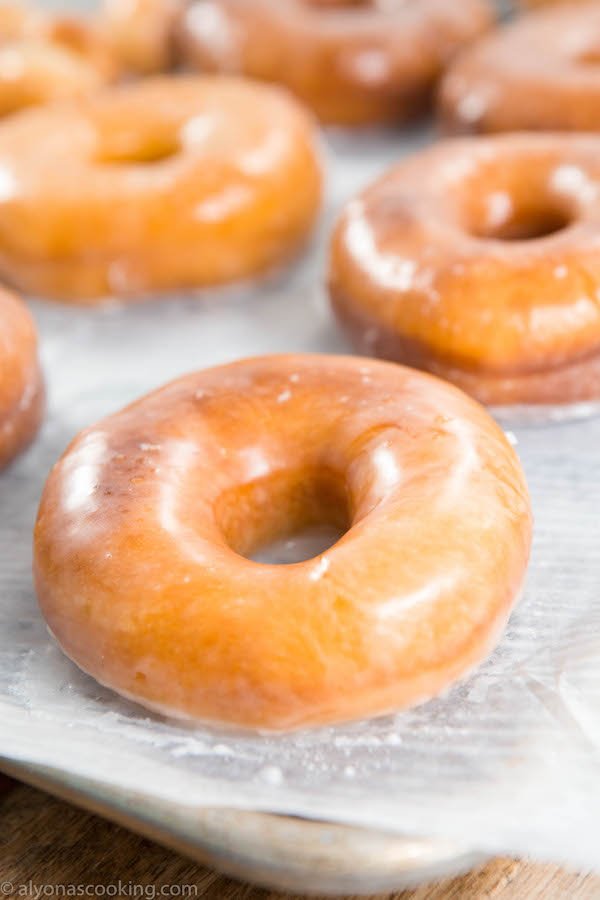
How to Make Classic Glazed Donuts: A Step-by-Step Guide
The classic glazed donut is a study in simple perfection: a light, yeast-raised ring with a tender crumb, finished in a thin sugar glaze that shatters softly and then melts. It is the donut that built the American donut shop, and the one Dallas-Fort Worth bakers still judge a counter by. Making them at home is absolutely achievable, and understanding the why behind each step is what separates a fluffy, bakery-style ring from a dense, greasy one.
What Makes a Glazed Donut Different
There are two broad families of donut: yeast-raised and cake. The classic glazed donut belongs to the yeast family. Instead of relying on baking powder or baking soda for lift, it uses yeast to slowly ferment the dough, producing carbon dioxide that creates an airy, slightly chewy interior. That long rise is also what gives a good glazed donut its faint, pleasant tang and its signature light weight.
The glaze itself is deceptively simple: powdered sugar thinned with a little milk or water and a splash of vanilla. The trick is applying it while the donuts are still warm so the glaze sets into a thin, semi-transparent shell rather than a thick frosting. That gloss is the hallmark of the style.
The Core Ingredients
A standard yeast-donut dough is an enriched dough, meaning it contains fat, sugar, and dairy or eggs in addition to flour and yeast. Each ingredient plays a specific role:
- Bread or all-purpose flour provides structure; bread flour yields a slightly chewier bite.
- Active dry or instant yeast is the leavening engine that drives the rise and flavor.
- Warm milk hydrates the dough and feeds the yeast while adding richness.
- Sugar sweetens lightly and gives the yeast food to ferment.
- Butter and eggs tenderize the crumb and add color and flavor.
- Salt controls the yeast and sharpens the overall taste.
For the glaze, you need only powdered (confectioners’) sugar, a few tablespoons of milk or water, and vanilla extract. Keep it slightly thinner than you think you need; it firms up as it sets.
Mixing, Rising, and Shaping
Begin by warming the milk to roughly 105 to 110 F, warm to the touch but never hot, since temperatures above about 130 F can kill the yeast. Combine the wet ingredients with the sugar and yeast, then work in the flour, butter, and salt to form a soft, slightly sticky dough. Knead until smooth and elastic, then let it rise in a covered bowl until doubled, usually one to two hours depending on your kitchen.
Roll the risen dough to about half an inch thick and cut rings with a donut cutter or two round cutters. Save the centers; fried donut holes are a baker’s reward. Let the cut rings proof a second time, uncovered just enough to dry the surface slightly, until they look puffy and jiggle gently when the pan is nudged. A proper second proof is the difference between airy and heavy.
Frying and Glazing Like a Pro
Heat a neutral oil such as canola or vegetable oil to 350 to 360 F and monitor it with a thermometer. Oil that is too cool soaks into the dough and turns donuts greasy; oil that is too hot browns the outside before the inside cooks. Fry the rings for about a minute per side until deep golden, turning once. Drain briefly on a rack.
While the donuts are still warm, dip each one into the glaze, turning to coat both sides, then return them to a rack set over a tray so the excess can drip and the glaze can set into that glassy finish. Work in small batches and resist crowding the oil, which drops the temperature and leads to uneven cooking.
Tips for Bakery-Quality Results
- Weigh your flour if you can; too much flour is the most common cause of dense donuts.
- Keep oil temperature steady between batches and let it recover before adding more.
- Glaze warm, not hot, so the coating clings without sliding off entirely.
- Eat them the day they are made; yeast donuts are best within a few hours and stale quickly.
A homemade glazed donut will never sit on the shelf as long as a store-bought one, and that is exactly the point. Made fresh, cooled just enough to handle, and glazed while warm, it captures the same morning magic that keeps the line moving at every good Dallas donut shop. Master this one recipe and every other variation, from chocolate-iced to cinnamon-sugar, is simply a finishing touch away.
