

Few foods inspire the kind of devotion that donuts do. From the first warm bite…
How Donuts Are Made: From Dough to Glaze
Few things capture a Dallas morning like the smell of fresh donuts drifting out of a neighborhood shop before sunrise. Behind that simple pleasure is a surprisingly precise process, where timing, temperature, and technique turn flour and sugar into something irresistible. Here is how donuts actually come together, from the first mix of dough to the final dusting of glaze.
The Two Families of Donuts
Almost every donut you will ever eat belongs to one of two families: yeast-raised or cake. Yeast donuts are leavened with live yeast, which ferments the dough and produces carbon dioxide. That gas creates the airy, pillowy, slightly chewy texture you find in glazed rings and filled donuts. Cake donuts, by contrast, are leavened chemically with baking powder or baking soda. They are denser, more tender, and crumblier, with the classic crackly exterior found on old-fashioned and buttermilk varieties.
The difference shapes everything that follows. Yeast dough needs time to rise and rest, so shops often prepare it the night before. Cake batter is mixed and fried quickly, which is why a cake donut can go from bowl to box in a fraction of the time. Knowing which family a donut belongs to tells you a lot about how it was made and how it will taste.
Mixing and Proofing the Dough
For yeast donuts, the process begins with combining flour, sugar, milk, eggs, butter or shortening, salt, and yeast into a soft, slightly sticky dough. The dough is kneaded until the gluten develops enough structure to trap gas, then left to rise, or proof, in a warm environment. Many bakers use two proofs: a bulk rise after mixing, and a second, shorter proof after the donuts are cut and shaped. This patient resting period is what gives yeast donuts their light, open crumb.
Cake donut batter skips the long wait entirely. The ingredients are blended into a thick batter, and because chemical leaveners activate with heat and moisture, the batter is fried soon after mixing. Overworking cake batter can make donuts tough, so bakers mix just until combined.
Shaping and Frying
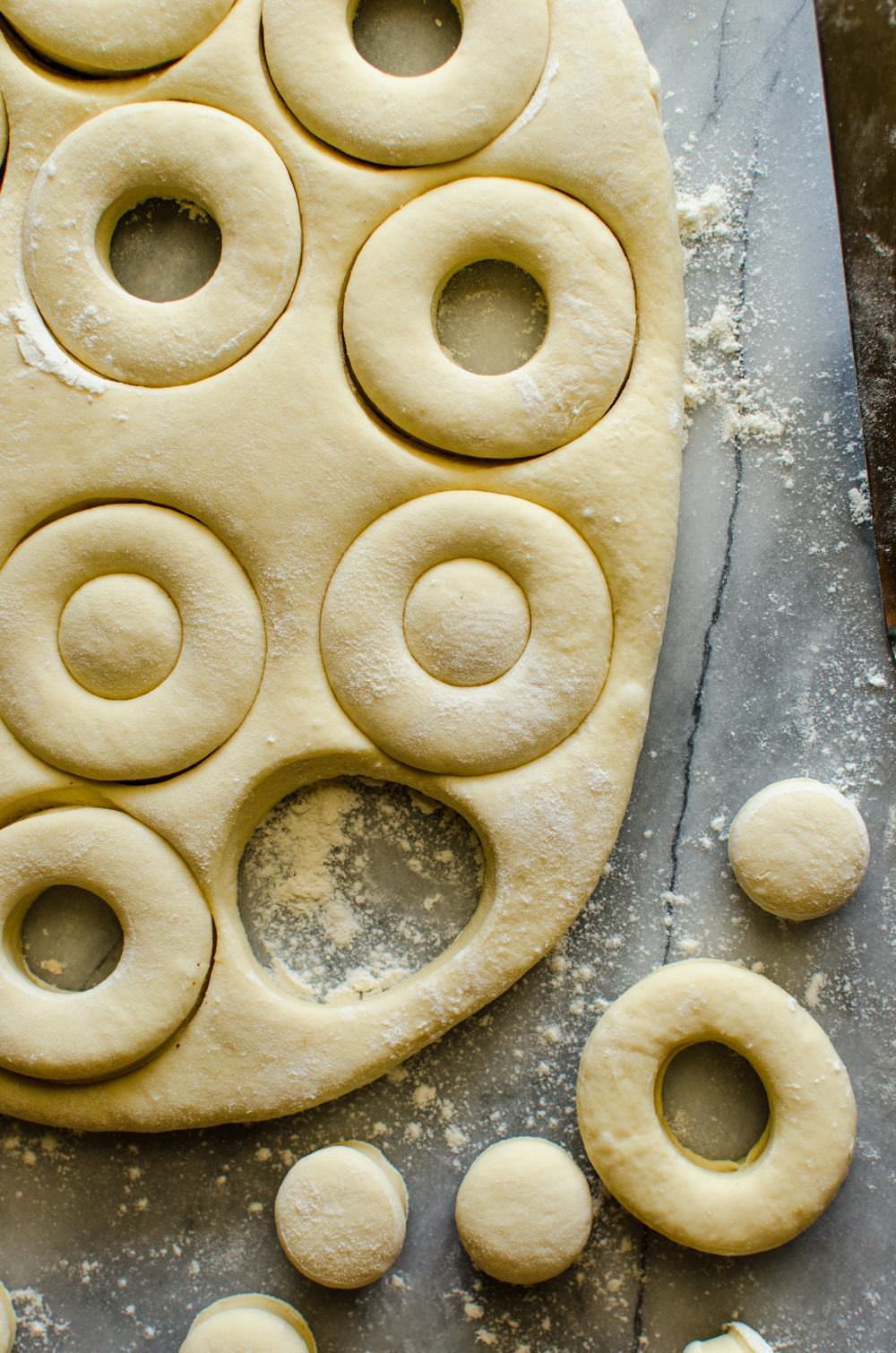
Once the dough or batter is ready, it is shaped. Yeast dough is rolled out and cut with a donut cutter that forms the ring and hole in one motion, while filled donuts are cut as solid rounds. Cake batter is usually piped through a depositor directly into the hot oil. The frying oil is the heart of the operation, typically held between 350 and 375 degrees Fahrenheit.
- Too cool: the donut absorbs excess oil and turns greasy and heavy.
- Too hot: the outside browns and burns before the inside cooks through.
- Just right: a golden crust forms while the interior stays moist and fully baked.
Donuts fry for only a minute or two per side, flipping once to brown evenly. You will often notice a pale ring around the middle of a well-fried yeast donut, sometimes called the “halo,” which marks the line where the donut floated at the surface of the oil.
Glazing, Filling, and Finishing
The final stage is where personality takes over. A classic glaze is a thin mix of powdered sugar, water or milk, and vanilla, applied while the donut is still warm so it sets into a glossy shell. Filled donuts are injected with custard, cream, fruit jam, or lemon curd through a small nozzle. Others are dipped in chocolate or maple icing, rolled in cinnamon sugar, or topped with sprinkles, chopped nuts, or toasted coconut.
Timing matters here too. Glaze applied to a hot donut melts thin and translucent, while glaze on a cooled donut sits thicker and whiter. This is also why donuts are best enjoyed within hours of frying, as that delicate crust and fresh crumb begin to stale quickly.
Why Freshness Defines a Great Donut
The whole point of this careful process is freshness. A donut is at its peak in the first few hours after it leaves the fryer, which is exactly why so many Dallas-Fort Worth shops fire up their kitchens long before dawn. Understanding how donuts are made makes that early-morning batch taste even better, because you can appreciate the craft in every bite.
Whether you prefer a feather-light yeast ring or a dense, spiced cake donut, the magic comes down to good ingredients, controlled heat, and impeccable timing. Next time you visit your local Texas donut counter, you will know exactly what went into the box.

